
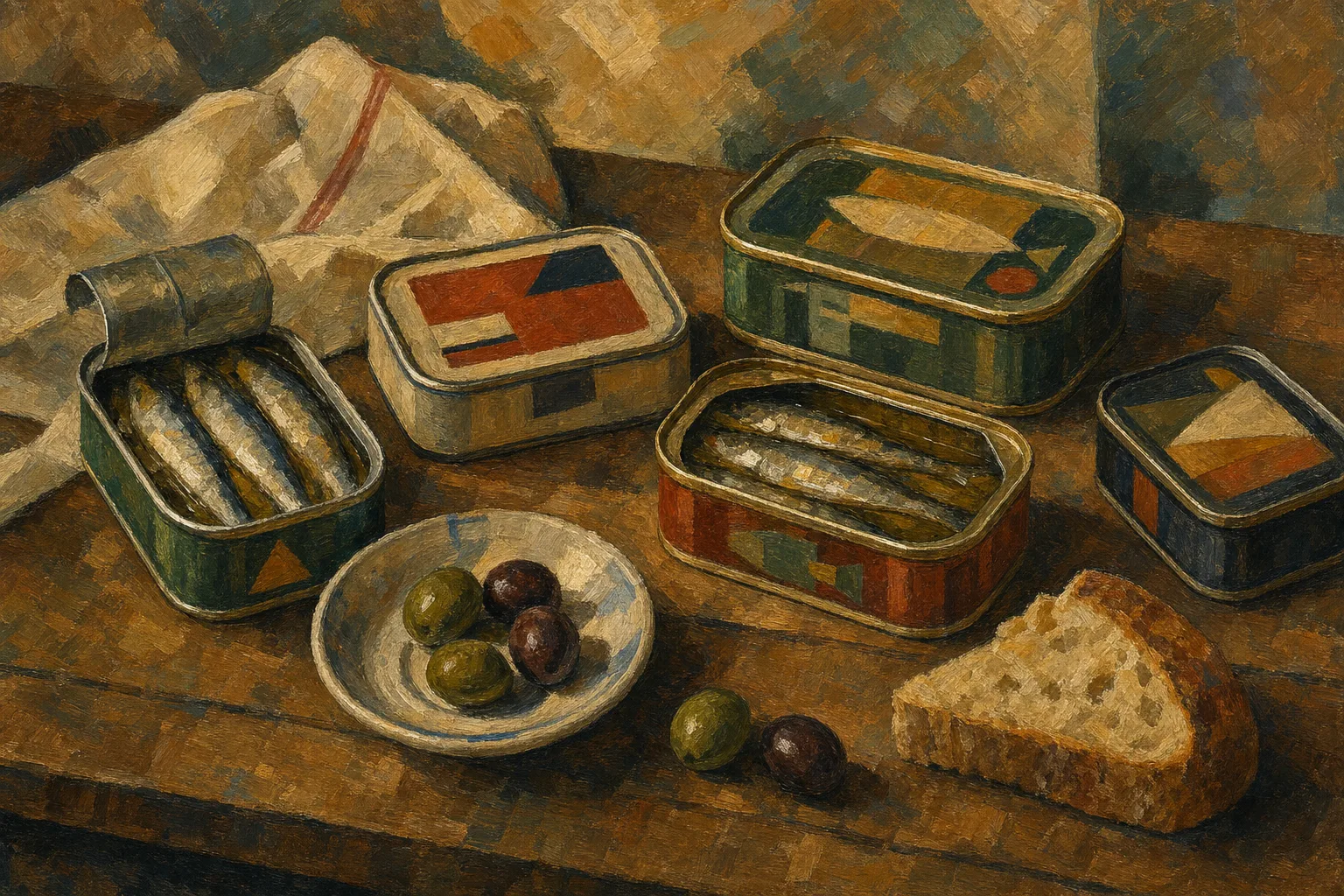
Somewhere around 2022, tinned fish stopped being a trend and started being a category. Trends have a press cycle — a wave of profiles, a TikTok moment, a flood of new entrants, and then a quiet retreat. Categories are different. Categories have repeat buyers, brand loyalties, and a market that keeps deepening even after the journalists move on. The question for 2026 is not whether Americans are buying tinned fish. They are. The question is which tins are actually worth the money.
Portugal consumes roughly 2.6 times more seafood per capita than the United States. That gap is not a cultural accident — it is the distance between a population that grew up knowing what a properly cured sardine tastes like and one that grew up with tuna in a can as the category ceiling. That ceiling is moving. The brands reviewed below are doing the moving.
This guide exists because the category now has enough serious players that “just buy whatever is at Whole Foods” is no longer adequate advice. Some of the best tins are excellent; some are expensive but not excellent; some are priced for the label rather than the fish. Knowing which is which is what we are here for.
Disclosure: we bought every tin in this guide at retail with our own money. The links below are affiliate links — we make a small commission if you buy through them, at no added cost to you. That relationship does not affect the scores.
How we ranked
Every tin is assessed across five criteria: appearance (on opening), aroma, texture, flavor, and value. Flavor carries the most weight. Value is the last modifier — a technically superior tin that costs twice as much as the next-best option earns points only if the gap in quality is proportionate to the gap in price. Full methodology at /methodology/.
Best overall · Ortiz Cantabrian Anchovies
9.4 / 10 · Editor’s Choice
The benchmark. There is a version of the anchovy that has spent thirty years ruining the anchovy’s reputation in America: gray, aggressively salty, smeared across a Caesar with apology. Ortiz is the rebuttal. These are anchoas del Cantábrico — caught in the spring off northern Spain, salt-matured for the better part of two years, and hand-filleted one fish at a time. The oil is pale and restrained, chosen to stay out of the way. The salt is integrated rather than dominant. The finish is long, savory, and oil-slicked in the best sense.
At sixteen dollars for a 47-gram tin, this is roughly the cost of a cocktail you will forget. Lay one fillet on buttered toast and you will understand why the Spanish treat the good anchovy as a delicacy rather than a topping. We measure every other anchovy we review against this one.
Best Portuguese sardine under $10 · Nuri Spiced Sardines
8.3 / 10
Every category needs a tin you can buy without thinking about it. In sardines, that tin is Nuri. Packed in Matosinhos in the Portuguese conservas tradition, the spiced version delivers genuine hand-packed quality, a gentle chili warmth that flatters the fish rather than masking it, and an edible-bone texture that makes a sardine feel complete rather than compromised. The price — seven dollars — is the most important fact about this tin.
Nuri is the tin we recommend to everyone who is new to the category, and the tin we keep buying long after we stopped being new to it. At this price you can eat it three times a week without rationalizing anything. The spice is present and well-calibrated: enough to lift the fish, not enough to hide it.
Best US-made tin · Fishwife Smoked Atlantic Salmon
8.7 / 10
It is fashionable, among people who take tinned fish too seriously, to be suspicious of Fishwife. The label is loud, the marketing has been everywhere, and the brand has done more for the category’s US profile than any individual product review ever will. None of that is a reason to dismiss the salmon. Behind the label is a genuinely good smoked product: forward applewood smoke, clean oil, a texture that holds together better than canned salmon has any right to, and a consistent flavor that does not vary tin to tin.
This is the gateway tin. Approachable, photogenic, crowd-proof, and made in the US to a standard that earns every dollar of the fourteen-dollar price. Buy it for a skeptic and watch the category pick up a new convert.
Best illustrated gift tin · José Gourmet Spiced Small Sardines
8.9 / 10
José Gourmet turned the conservas tin into a giftable object long before the category had any American cultural momentum, and the illustrated paper sleeve has earned the brand placement in design stores that most food brands would not know how to achieve. The packaging is the most-discussed thing about José Gourmet and also, by design, the least important: the fish inside has to hold up once the sleeve comes off.
For the Spiced Small Sardines, it holds up. The spice blend is clove, bay, chili, and garlic — specific rather than vague — and the choice of small-sized fish delivers a firmer, more textured bite than larger sardines. The flavor is layered: clean sardine first, then a slow chili warmth, then clove arriving late as a faintly sweet close. At eleven dollars it costs more than Nuri, tastes different rather than simply better, and delivers a more complex profile. For everyday eating, Nuri. For a tin that earns its place on a shelf and holds up at a dinner party, this one.
Best mackerel · Patagonia Provisions Roasted Garlic Smoked Jack Mackerel
8.5 / 10
Mackerel is the most underrated fish in the American pantry. Pacific jack mackerel is abundant off the US coast, sustainably managed, higher in omega-3s than salmon, richer in iron than tuna, and possessed of a depth of flavor that neither of those more familiar proteins can match. It is also almost completely absent from the American canned-fish conversation.
Patagonia Provisions — launched in March 2026 in partnership with the Wild Fish Conservancy — is making a deliberate case for US-sourced mackerel. The roasted garlic and smoke profile is well-executed: the garlic is mellow and caramelized rather than sharp, the smoke is wood-forward and clean, and the fish underneath is boldly flavored in the way that mackerel demands. At nine dollars it is priced for everyday buying, which is the right call for a tin trying to move a species up the consideration ladder. This is not a beginner’s tin — the flavor is assertive and it rewards a palate that has done some work — but for anyone past the entry tier it is one of the better things you can open this year.
Most ambitious anchovy (with a caveat) · Don Bocarte Cantabrian Anchovies
8.6 / 10
Don Bocarte is the cult ultra-premium Cantabrian anchovy — large, thick, beautifully filleted, aged past eighteen months, packed in a rich golden oil. The tin is magnificent to look at. The fillets are the most generous of any anchovy we have reviewed. In a blind tasting with anchovy enthusiasts, it would likely win on sheer impressiveness.
Here is the caveat: Don Bocarte costs thirty-two dollars. Ortiz, our Editor’s Choice and the reference standard for the category, costs sixteen. For thirty-two dollars to be the right choice, Don Bocarte would need to be twice as good as Ortiz. It is not. It is an excellent anchovy — deep, complex, meaty, with a long umami finish — but the assertive olive oil sometimes edges toward dominating the fish, which is the precise thing that Ortiz’s restrained oil avoids. The difference in quality is real but not proportionate to the difference in price.
Don Bocarte is the right tin in one specific scenario: you are serving anchovies as a centerpiece, plainly, to someone who already knows what a great anchovy tastes like. In that context the beautiful fillets and the collector-tier presentation justify the price. For everyone else — for everyday eating, for cooking where the anchovy is a seasoning rather than the star — the sixteen-dollar Ortiz is the correct decision and the gap between them is not close enough to argue about.
What we are testing next
On the editorial calendar for Q3: Conservas Ortiz ventresca (the belly cut, which may be the most luxurious thing you can buy for twenty dollars), Pinhais hand-canned Portuguese sardines, Güeyu Mar wood-grilled octopus from Asturias, and Espinaler cockles from Galicia. The rankings above will be updated when those reviews are complete.
The bottom line
Tinned fish in 2026 is not a trend on its way out. It is a category on its way in. The six tins above are where to start — chosen not for their labels or their stories but for what happens when you open them and pay attention. We update this guide every quarter as new tins earn a place or existing ones are displaced. When something changes, we will tell you and explain why.
Start with Ortiz. Then Nuri. Then branch outward from there.