
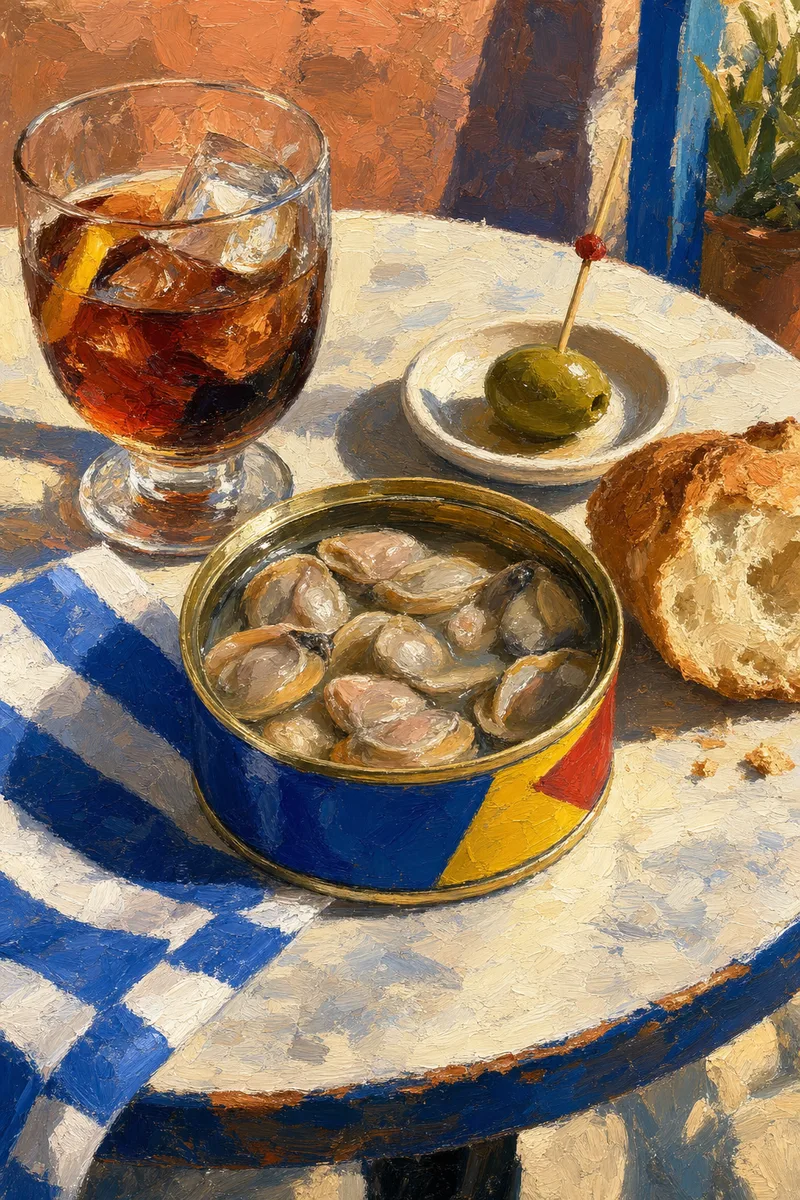
Espinaler was a bar before it was a brand. The original establishment opened in 1896 in Vilassar de Mar, a coastal town north of Barcelona, and the house aperitivo culture that grew up around it — small tins of shellfish, a splash of the proprietary Espinaler sauce, a glass of cava or vermouth — eventually became so associated with the name that it turned into a product line. The bar is still there. The cockles from that bar are now available in specialty shops across the United States, and they carry with them an entire category that most Americans have never encountered.
A berberecho is not a clam. This distinction matters, and if you open a tin of Espinaler expecting clams you will be mildly surprised and possibly confused. Cockles are rounder, smaller, and brighter in flavor — the brine is their dominant register in a way it isn’t in clams, and the texture is firmer, springier, with a bite that gives more cleanly than a steamed clam’s. They are an acquired taste in the way that a well-made olive is an acquired taste: slightly alien on first encounter, and then suddenly obvious.
Tasting notes
- Small, pale, ivory-grey shellfish in a clear, light brine. No sauce, no oil — the natural liquid is barely tinted. The cockles are plump and whole, packed in rows with the rounded shells removed, the flesh intact and unbroken.
- Clean brine and sea-mineral, with a faint sweetness underneath. Closer to the smell of a good oyster bar than to anything aggressively 'fishy.' The brine is the dominant note and it is not a defect.
- Firm and springy — the defining textural quality of a cockle done right. There is genuine resistance before the flesh yields, which makes eating them one at a time, on a small fork or a toothpick, the correct method. They do not collapse.
- Bright, briny, and clean, with a sweetness that emerges after the initial salinity. The flavor is high-register and direct — it does not build in complexity the way an anchovy does, but it is not trying to. The cockle's argument is clarity, and this tin wins it.
The canonical way to eat these is with the Espinaler sauce — a vinegar-forward, paprika-and-anchovy emulsion that the bar has been making since the brand’s early years. The sauce is sold separately and is worth tracking down: a few drops across the open tin transforms the clean brine into something with warmth and acidity and a faint umami from the anchovy base. This combination is what you would be served, without explanation, if you sat down at an aperitivo bar in Barcelona. The tin travels the custom; the sauce is the context.
A candid note: Espinaler berberechos are not for everyone, and they are definitely not for every occasion. If you are buying your first serious tinned shellfish and you find cockles strange, that is a legitimate response. The flavor profile is narrow and specific in a way that a sardine or anchovy is not — there is less room for the product to be everything to everyone. What the tin delivers, it delivers precisely: a piece of Catalan aperitivo culture, intact, shelf-stable, and available without a flight to Spain. Once you understand what it is doing, you will not want to be without it before dinner.
The verdict
8.8 / 10The best introduction to Spanish cockle culture available in the American market. Serve with the Espinaler sauce, a cold glass of something, and some explanation — this tin teaches a lesson no sardine or anchovy can.
Where to buy
- La Tienda · $16 Buy at La Tienda
- FishNook · $17 Buy at FishNook
- Despana · $18 Buy at Despana